
Capabilities
Foundry Capabilities
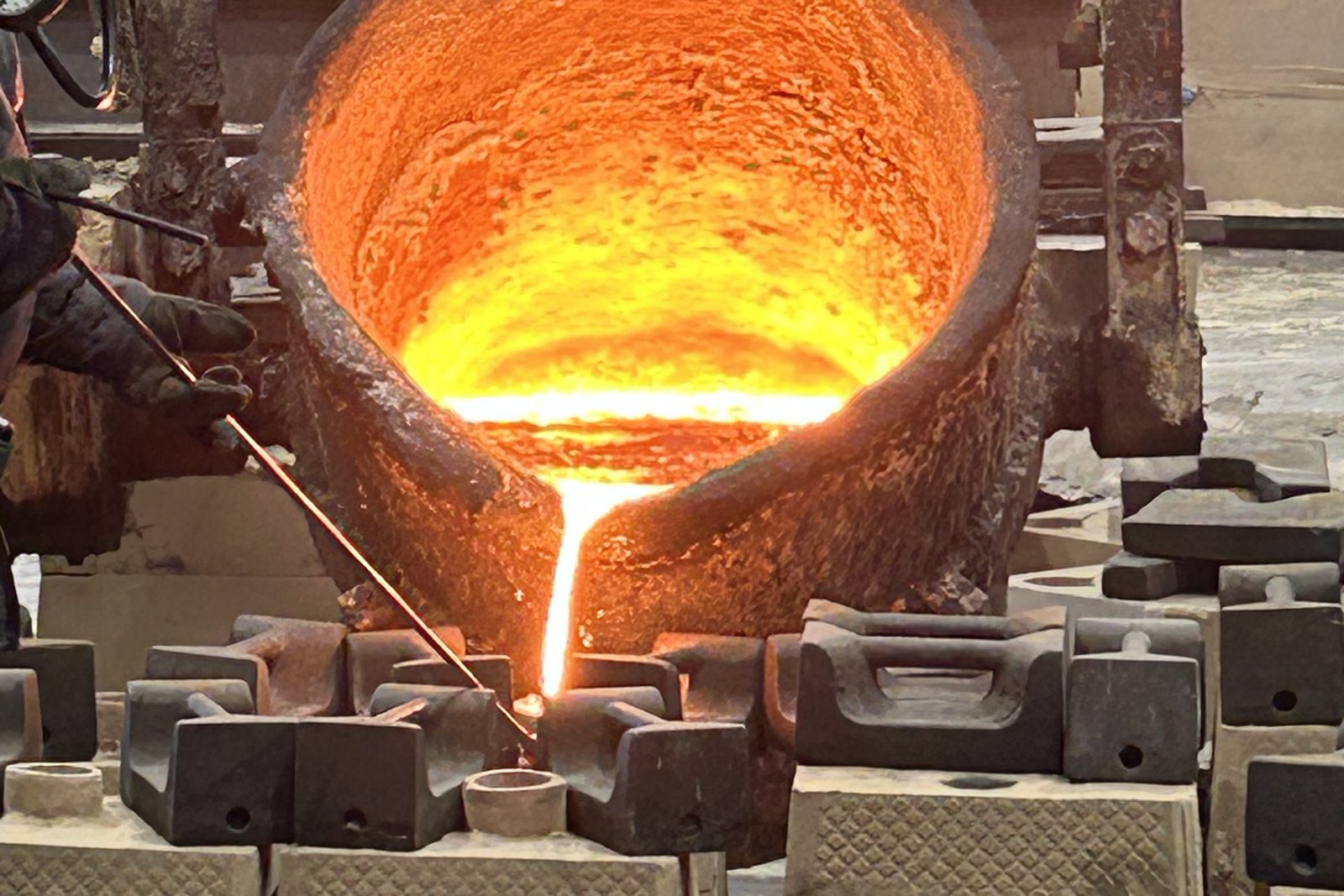
Lake Foundry specializes in large, complex gray and ductile iron castings for OEMs and industrial customers. Our operation is designed to accommodate a wide range of production requirements, from single custom castings to long-running OEM programs involving numerous part numbers and recurring low-volume orders.
Our capabilities span pattern making and tooling development, no-bake sand molding, pouring, heat treatment, inspection, testing, and machining. We manage complex casting requirements, work with existing tooling, or develop new patterns from drawings, 3D models, and physical components.
- Pattern making & tooling
- No-bake sand molding
- Pouring
- Heat treatment
- Inspection & testing
- Machining
Casting Capacity
| Gray Iron | Ductile Iron | |
|---|---|---|
| Finished casting size | Up to 12,500 lb | Up to 3,500 lb |
| Pour capacity | Up to 15,000 lb | Up to 6,000 lb |
| Specifications | ASTM A48, A126, A278, A319 | ASTM A395, A536 |
| Common grades | CL20, CL25, CL30, CL35, CL40 | 60‑40‑18, 65‑45‑12, 65‑45‑15, 80‑55‑06, 100‑70‑03 |
| Production | One-off and recurring low-volume | One-off and recurring low-volume |
| Molding | No-bake sand | |
| Typical lead time | 4–6 weeks | |
| Emergency lead time | 1–2 weeks; contact us for faster turnaround | |
| Molding box / flask size | 130″ × 130″; custom sizes can be accommodated | |
Our production history covers a wide range of casting sizes and part families. Pump work alone includes casings, volutes, impellers, elbows, bearing housings, and other components across gray and ductile iron grades.
Built for Low‑Volume, High‑Quality Production
Not every OEM casting program consists of long runs of the same part. Many of the programs we support include multiple cast part numbers, with relatively few pieces of each produced at a time. Others involve engineered-to-order equipment where the castings change by project or configuration.
Our operation is set up to move between that kind of work while maintaining the tooling, specifications, and production history behind each part. That makes Lake a strong fit when the total casting program is meaningful but the quantity of any individual part is relatively small.
Molding & Core Work
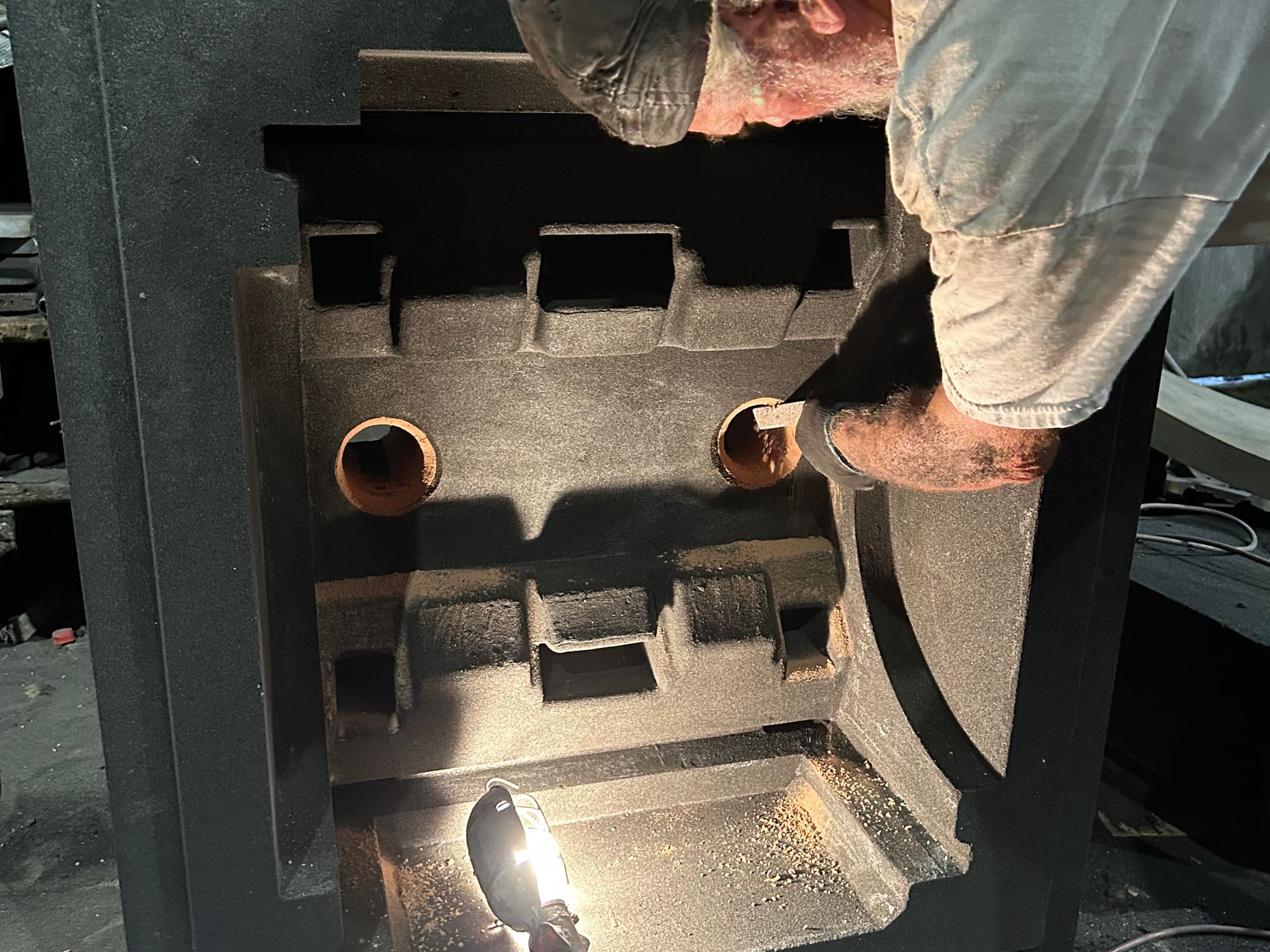
Lake Foundry specializes in complex iron castings with demanding internal geometries, including pump casings, volutes, and other highly cored components.
Our team considers core design, placement, tooling, and machining requirements together to ensure the molding process produces the required internal passages and finished dimensions. This coordination is particularly important for castings where internal complexity presents greater manufacturing challenges than the external geometry. Molds and cores can also be produced in 3D-printed sand.
Pattern Making & Tooling
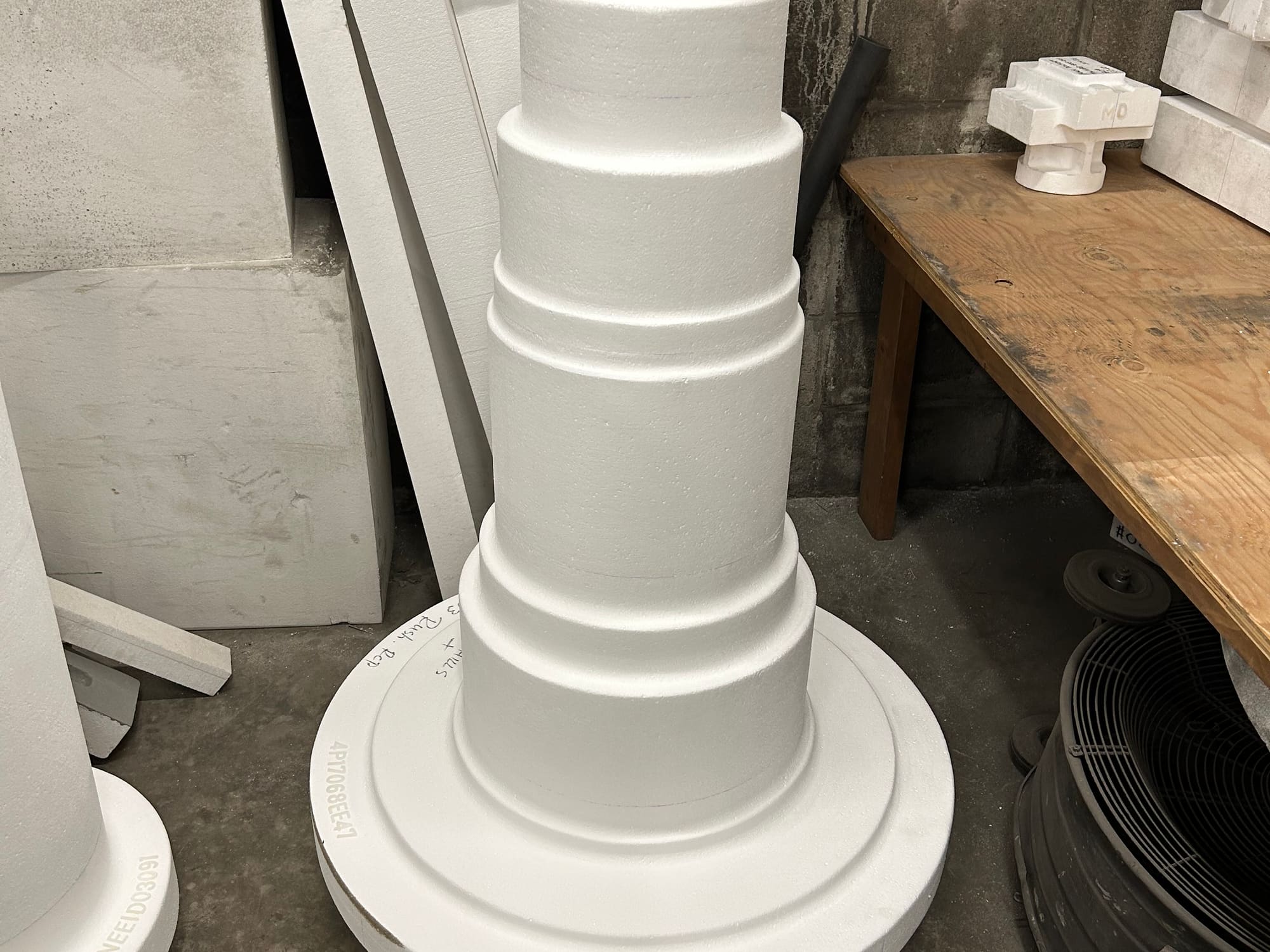
Lake Foundry’s in-house pattern shop develops new tooling and adapts existing patterns and core boxes to support complex castings, recurring production, and replacement components.
Our capabilities include single-use polystyrene foam patterns, wood patterns, aluminum patterns, 3D sand printing, and CNC-supported tooling development. For customers transferring production or sourcing older components, we can evaluate existing tooling, identify necessary modifications, and develop replacement patterns when original tooling is no longer available.
Transferring Existing Work to Lake
Many sourcing projects begin with a casting that is already being produced somewhere else. We can review an existing program using the current casting and machining drawings, material specification, tooling, inspection requirements, and production history. If patterns and core boxes are available, we can evaluate their condition and determine what would be required to use them in our process. If moving the existing tooling is not practical, we can evaluate whether new tooling or 3D-printed sand provides another option.
An OEM with a larger group of cast parts does not need to move the entire program at once. We can begin with the parts that fit our equipment and production model, establish them at Lake, and evaluate additional part numbers over time.
Replacement & Legacy Parts
When an established casting no longer has usable tooling or complete documentation, we can work from the physical component and the information that remains. Depending on the job, that may mean working from existing drawings or digital geometry, evaluating an old pattern, developing new tooling, or using the physical part to make your replacement.
Our Emergency & Replacement page explains how we approach those jobs, including work where the existing component is worn or the original tooling is no longer available.
Machining
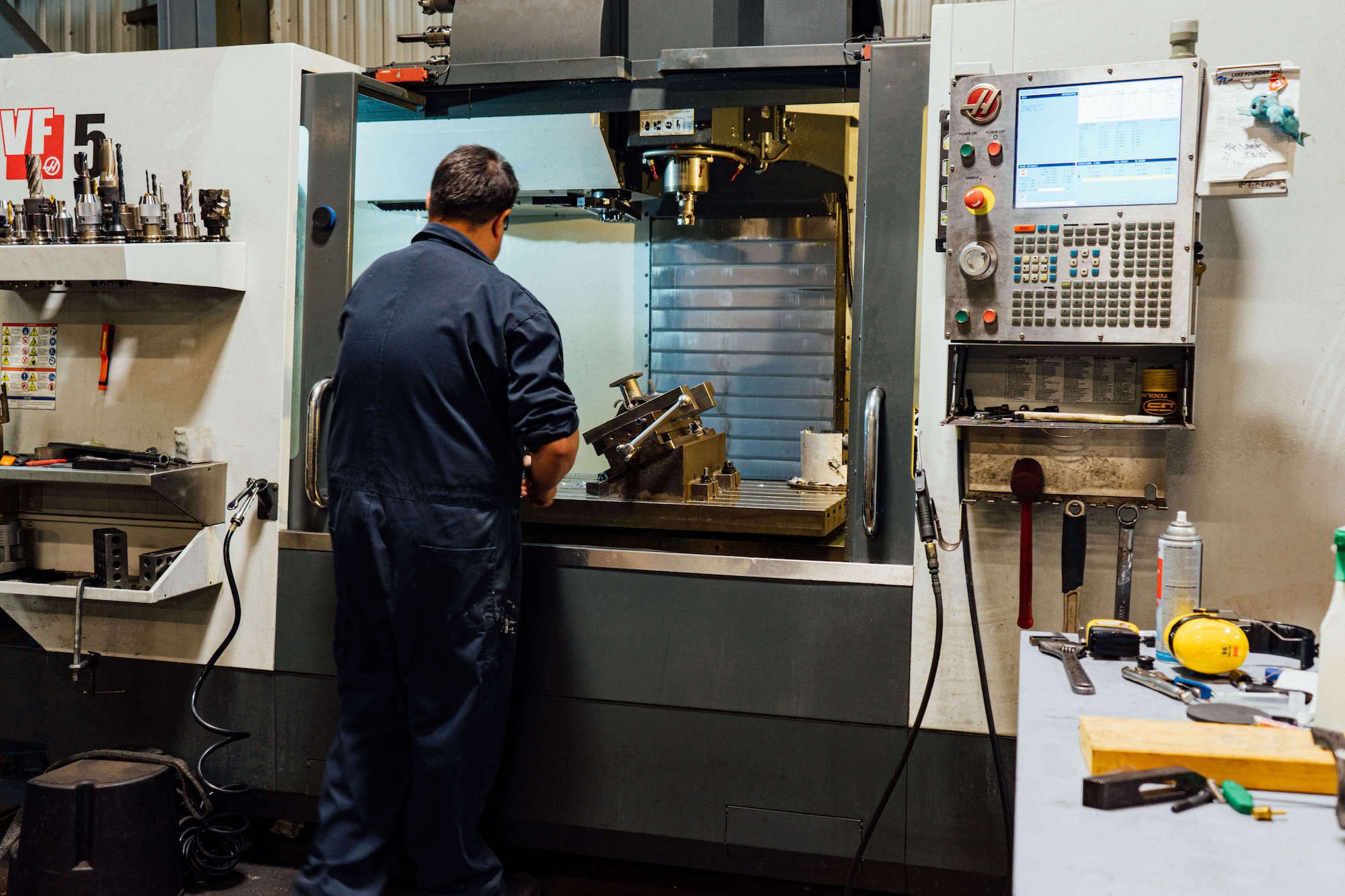
We can offer machining for cast components and consider the finished-part requirements when reviewing the casting and tooling. For parts with machined bores, faces, mounting surfaces, or other dimensional features, looking at the machining requirements early allows the casting and finished-part drawings to be considered together.
Heat Treatment
Heat treatment can be incorporated into a casting program when required by the material specification or finished-part requirements.
FAQs
What size iron castings can Lake Foundry produce?
Lake Foundry produces finished castings up to 12,500 lb in gray iron and up to 3,500 lb in ductile iron. Pour capacity, the total metal poured for a casting, is up to 15,000 lb of gray iron and up to 6,000 lb of ductile iron.
Does Lake take on low-volume casting orders?
Yes. Lake is a jobbing foundry built for low-volume, high-quality work. That can mean a single casting or dozens of part numbers ordered in modest quantities over the life of a product line.
Which iron specifications does Lake pour to?
For gray iron, ASTM A48, A126, A278, and A319. For ductile iron, ASTM A395 and A536, in grades 60‑40‑18, 65‑45‑12, 65‑45‑15, 80‑55‑06, and 100‑70‑03.
Can we move an existing casting program to Lake?
Yes. Lake reviews the current drawings, material specification, tooling, inspection requirements, and production history. You don’t need to move a whole program at once. Many OEMs start with a few part numbers and add more over time.
What is the typical lead time for an iron casting?
Typical lead time is 4 to 6 weeks for both gray and ductile iron. Actual timing depends on the part, the tooling, and any machining or inspection requirements. Ultimately, we tailor to your need. If you need faster, just ask.
Have a Casting to Review?
Send us the drawing, 3D model, existing pattern, or physical part, along with the material, quantity, and turnaround you need. If some of that information is missing, send what you have. Our team will review the requirements and work with you to get the casting into production.