
Capabilities · Ductile iron
Ductile Iron Castings Up to 3,500 lb
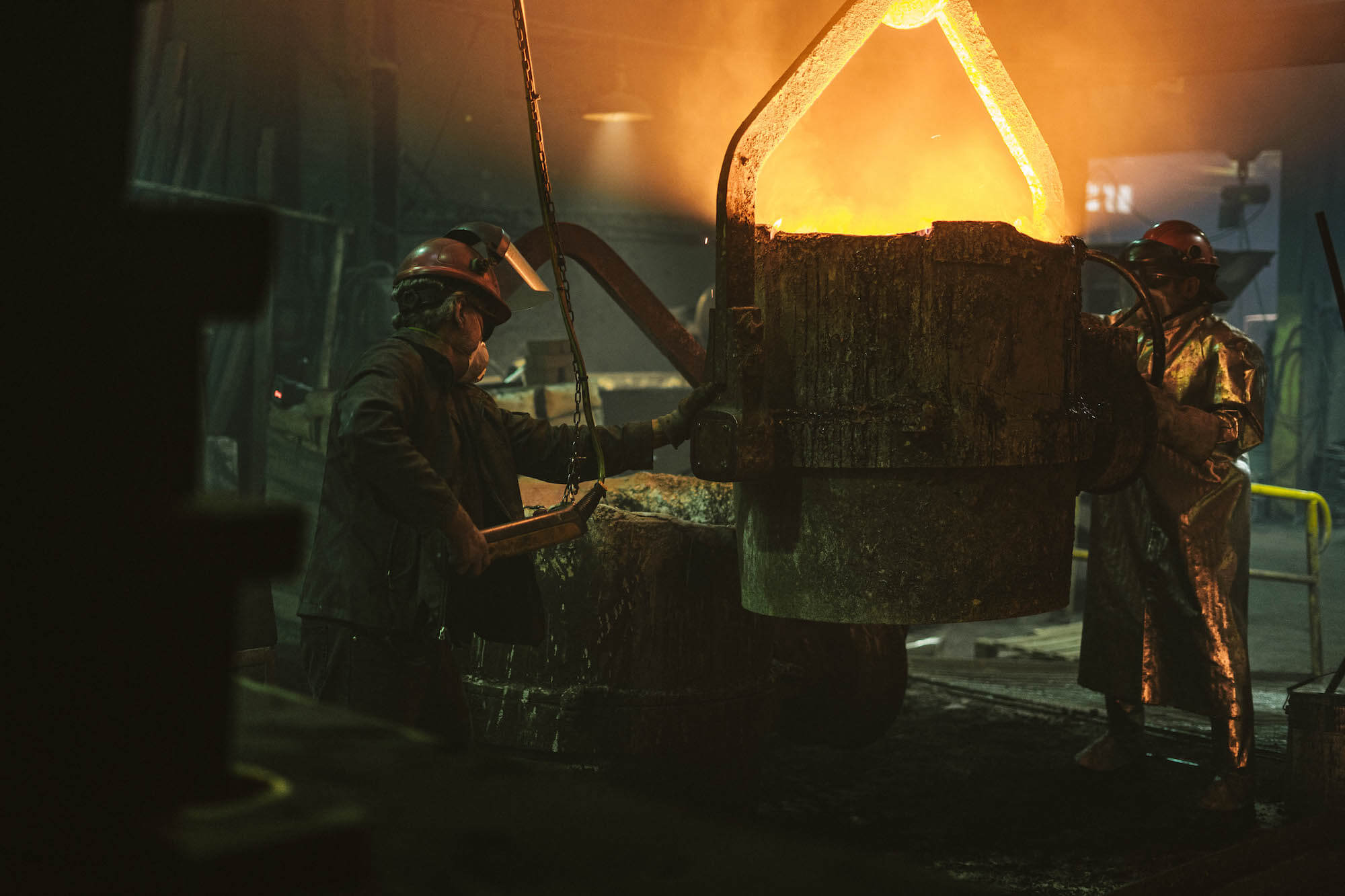
Our work includes large and complex industrial components, established OEM parts, and lower-volume programs. 65‑45‑12 and 80‑55‑06 are among the grades we produce most often.
Ductile Iron Capacity
- Finished casting sizeUp to 3,500 lb
- Pour capacityUp to 6,000 lb of ductile iron
- MoldingNo-bake sand
- SpecificationsASTM A395 and A536
- Grades60-40-18, 65-45-12, 65-45-15, 80-55-06, 100-70-03
- ProductionOne-offs through recurring low-volume programs
- Typical lead time4–6 weeks
Grades & Specifications
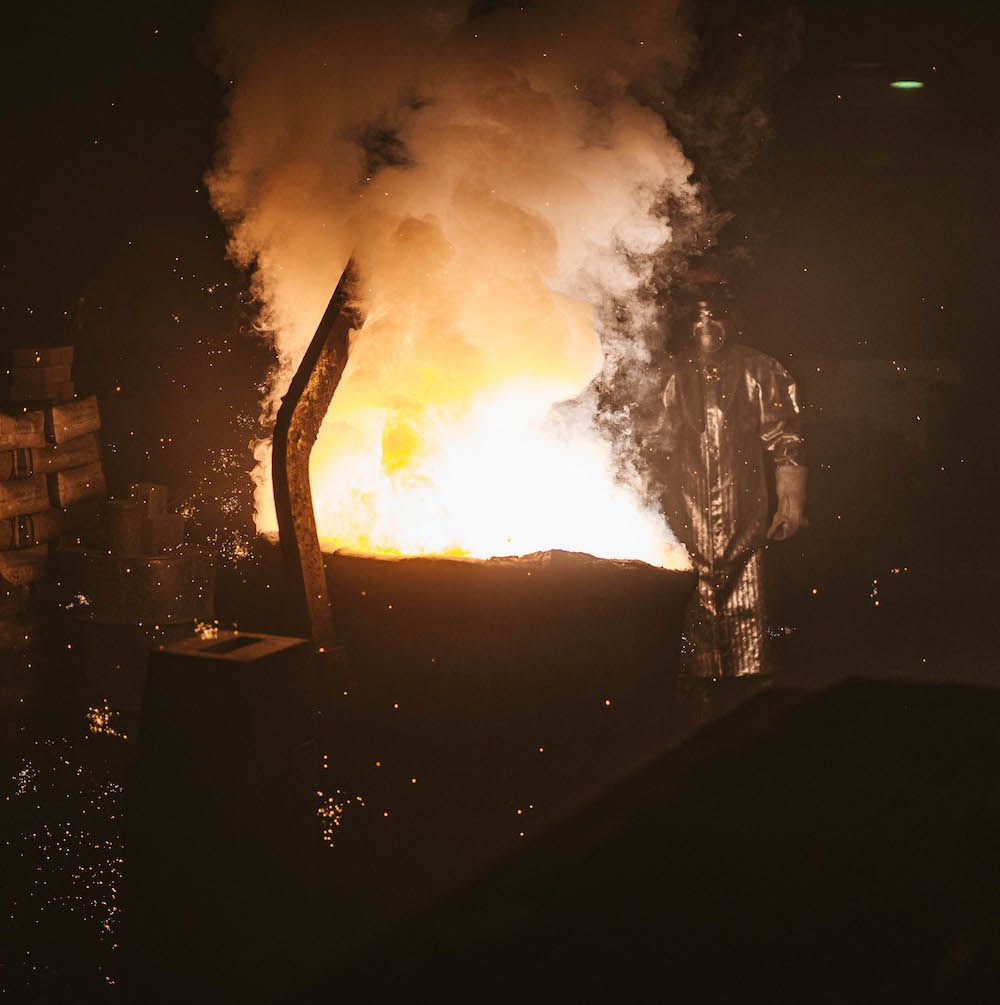
We pour ductile iron to the material specification established for the component.
| Grade | Specified Properties |
|---|---|
| 60‑40‑18 | 60 ksi tensile, 40 ksi yield, 18% elongation |
| 65‑45‑12 | 65 ksi tensile, 45 ksi yield, 12% elongation |
| 80‑55‑06 | 80 ksi tensile, 55 ksi yield, 6% elongation |
| 100‑70‑03 | 100 ksi tensile, 70 ksi yield, 3% elongation |
Our ductile iron work includes ASTM A536 as well as ASTM A395 for pressure-retaining applications covered by that specification. For an existing component, we pour to the material and grade already specified for the part.
ASTM Designation
Below is a chart of the material specifications we’re able to produce for ductile iron castings.
ASTM A395
ASTM A536
Why Ductile Iron Is Used
In ductile iron, the graphite forms as nodules rather than flakes. That structure gives the material greater ductility and strength than gray iron for applications where those properties are required. Depending on the grade and application, ductile iron can provide:
- High tensile and yield strength
- Good impact resistance
- Good machinability
- The ability to deform before fracture
Lake produces finished ductile iron castings up to 3,500 lb.
Ductile Iron Experience
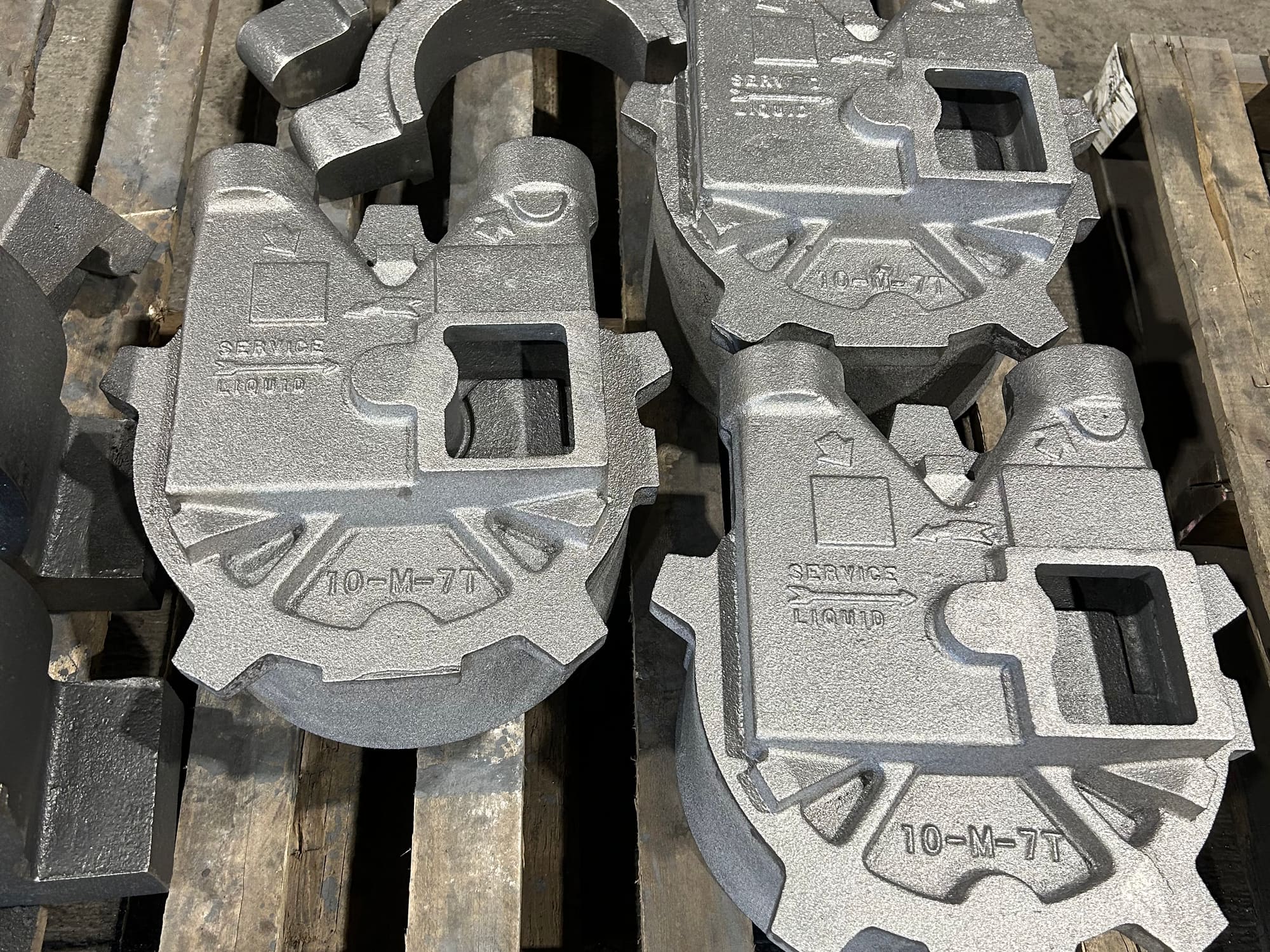
Pump and fluid handling has been an established part of our business for years. Our ductile iron production includes housings, casings, impellers, and other components where the OEM specification calls for ductile iron. We also produce ductile iron components for pulp and paper equipment and other industrial machinery.
Complex Castings & Core Work
Large ductile iron castings can involve substantial internal geometry, changes in wall section, and machined features that have to be considered before production begins. We have experience with highly cored castings, particularly in pump and fluid handling applications. Tooling, core arrangement, casting geometry, and machining requirements are reviewed together so the production approach reflects the finished part.
Existing Ductile Iron Parts
We can take on established ductile iron parts as well as new programs. Existing drawings, material specifications, patterns, and core boxes can be reviewed to determine what would be required to produce the casting at Lake. If existing tooling is unavailable or impractical to move, we can also evaluate other tooling approaches based on the part and quantity.
Inspection & Testing
Ductile iron castings are inspected and tested to the grade, material specification, and customer requirements established for the part.
Lake Foundry is ISO 9001:2015 certified.
Industries Served
- Pump and Valve Manufacturers
- Construction
- Industrial Machine Tools & Fixtures
- Steel Mills
- Utilities
- Industrial Doors
- Compressor Manufacturers
- Zinc Ingot Producers
- Mining Equipment
- Crane Companies
- Electrical Motor Manufacturers
FAQs
What size ductile iron castings does Lake Foundry pour?
We can pour up to 6,000 lb of ductile iron in no-bake sand molds. That range covers smaller components as well as large, heavily cored parts such as pump housings and casings.
Which ductile iron grades and specifications do you work to?
We pour to ASTM A536 and ASTM A395. Grades include 60‑40‑18, 65‑45‑12, 65‑45‑15, 80‑55‑06, and 100‑70‑03. The grades we see most often are 65‑45‑12 and 80‑55‑06. For an existing part, we pour to the grade and material specification already established for that component.
What is the difference between ASTM A536 and ASTM A395?
ASTM A536 is a general specification for ductile iron castings, with grades defined by mechanical properties including tensile strength, yield strength, and elongation. ASTM A395 covers ferritic ductile iron pressure-retaining castings for applications where the requirements of that specification apply. For an established part, we work to the specification called out on the drawing or other customer documentation.
Do you take on one-off or low-volume ductile iron castings?
Yes. Our production ranges from single castings to recurring low-volume programs. We also take on established parts. Send us the drawings, material specifications, and any available pattern or core-box information, and we’ll determine what would be required to produce the casting at Lake.
How long does a ductile iron casting take?
Typical lead time is 4 to 6 weeks. The actual timeline depends on part complexity, core work, tooling condition, and any machining, testing, or inspection requirements. We review those factors along with the drawing and quantity when quoting the job.
Have a Casting to Review?
Send us the drawing, 3D model, existing pattern, or physical part, along with the material, quantity, and turnaround you need. If some of that information is missing, send what you have. Our team will review the requirements and work with you to get the casting into production.